

RENDERING ADVICE
Silicone Render: Benefits, Costs & When It’s the Right Choice
Updated September 2026 • By Neil – P3 Plastering
Silicone render is a modern external wall finish that has become increasingly popular for homeowners looking for a coloured, low-maintenance alternative to traditional painted render.
It is known particularly for its water-repellent properties, vapour permeability and fine textured appearance. However, silicone render is not simply a coating that can be applied to any wall. It forms part of a compatible render system, and the preparation and system build-up need to suit the particular property and substrate.
In this guide, we explain what silicone render is, how it is applied, its main benefits, what affects the cost and some of the factors to consider when deciding whether it is suitable for your home.
What Is Silicone Render?
Silicone render is a thin-coat decorative render finish containing silicone-based technology. It is available in a wide range of colours and typically produces a fine, uniform textured surface.
Unlike traditional sand and cement render, the silicone finish is relatively thin and is normally applied as the final coat of a compatible rendering system.
The complete system can include preparation of the existing background, a suitable base coat, reinforcement mesh where specified, primer and the final silicone render. The exact build-up depends on the substrate and manufacturer’s specification.
You can find more information about the service itself on our silicone rendering page.
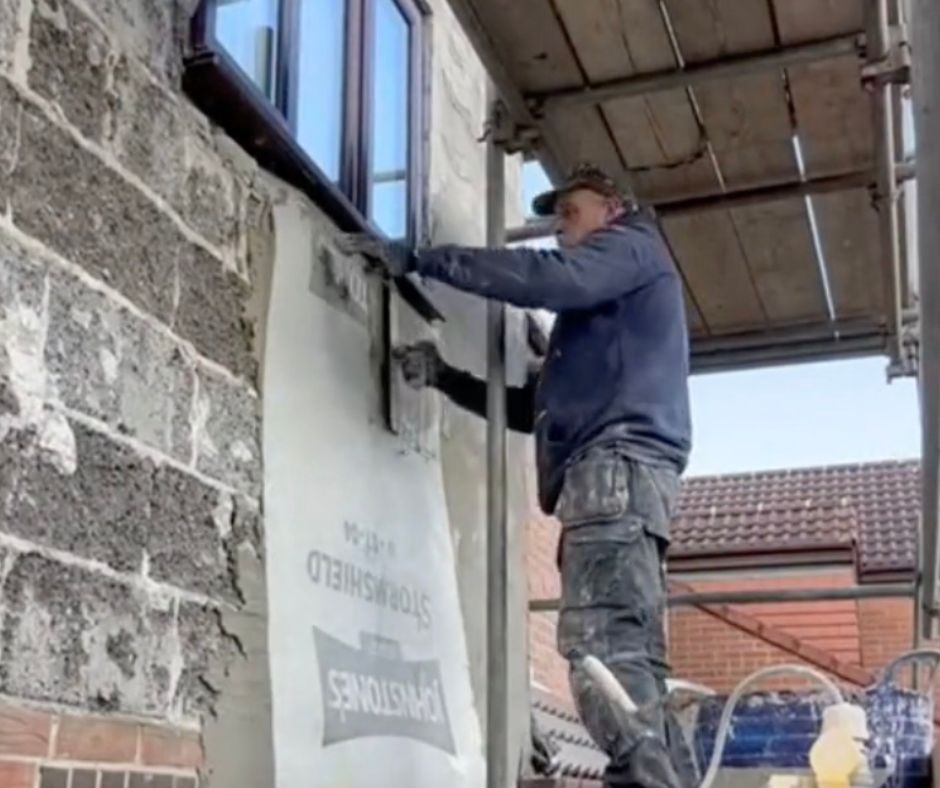
Johnstone’s Stormshield Silicone Render
For silicone rendering work, P3 Plastering primarily uses the Johnstone’s Stormshield Thin Coat Silicone Render system.
It provides a modern decorative finish and is available in a wide range of colours, allowing the appearance to be chosen to complement the property.
As with any proprietary render system, the individual components need to be used together as specified for the particular background and application.
What Are the Benefits of Silicone Render?
Silicone render has several characteristics that make it an attractive option for suitable external walls.
Water-repellent surface
One of the best-known characteristics of silicone render is its ability to repel liquid water at the external surface.
This can help reduce the amount of rainwater absorbed by the finish. It should not, however, be treated as a way of solving an existing damp, drainage or building defect.
Vapour permeability
Silicone render systems are designed to allow water vapour to pass through them. This is different from simply describing a wall as waterproof and is one of the reasons the complete render specification matters.
Coloured finish
The finish is supplied in colour, so it does not normally need to be painted simply to achieve its intended appearance.
A wide colour choice also makes it possible to create anything from a traditional neutral exterior to a more contemporary finish.
Fine textured appearance
Silicone render has a finer texture than the scraped appearance commonly associated with monocouche render. The precise appearance depends on the particular product and grain size selected.
Relatively low maintenance
The water-repellent characteristics of silicone render can help reduce the amount of moisture and dirt retained on the surface.
That does not make it completely maintenance-free. Exposure, surrounding vegetation, pollution, weather and rainwater detailing can all affect how an external wall looks over time.
P3 TIP
Silicone render should be considered as a complete system rather than just the final coloured coat. The condition of the wall, preparation, base coat, reinforcement and primer can all be important to the performance of the finished render.
How Is Silicone Render Applied?
The precise application process depends on the existing wall and the specified manufacturer system, but the work generally involves several stages.
1. Assessing and preparing the background
The substrate needs to be suitable, stable and appropriately prepared. Loose or failed existing render should not simply be concealed beneath a new system.
2. Base coat and reinforcement
A compatible base coat is applied as required by the system. Reinforcement mesh may be incorporated into the base coat in accordance with the specification.
3. Preparing for the finish
Once the base is ready, the appropriate primer is applied where required to prepare the surface for the silicone finish.
4. Applying the silicone render
The thin-coat silicone finish is then applied and textured to produce the final decorative surface.
Weather conditions are important during external rendering, and work may need to be rescheduled if conditions are unsuitable for the particular stage of the system.
What Does Silicone Render Look Like?
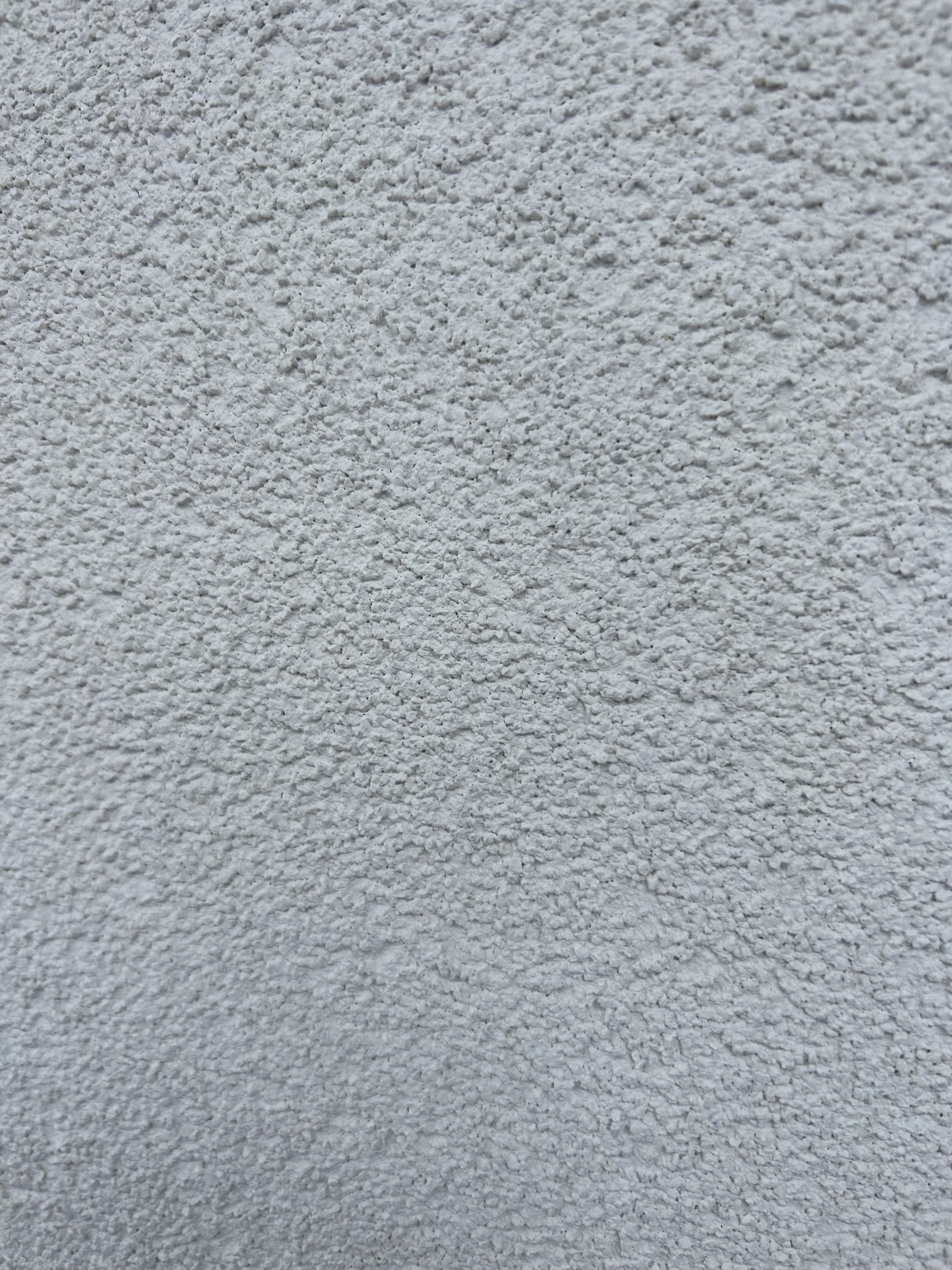
Silicone render generally has a fine, evenly textured appearance rather than the more pronounced scraped texture associated with monocouche.
The final texture is influenced by the grain size of the chosen product. Different grain sizes can create a finer or more pronounced texture while retaining the characteristic appearance of a thin-coat finish.
Colour is also an important part of the finished appearance. Rather than painting the completed render to create the required colour, the silicone finish itself is supplied in the selected colour.
Silicone Render vs Monocouche Render
Both silicone and monocouche can provide a coloured external finish, but they are different types of render system.
Monocouche render is a cement-based, through-coloured render commonly finished with a scraped texture. Silicone render is a thin-coat finish used as part of a compatible system and generally produces a finer texture.
Silicone is particularly known for its water-repellent characteristics and vapour permeability, while monocouche offers the distinctive appearance of a traditional scraped coloured render.
Neither should automatically be considered the right choice for every property. We look at the differences in more detail in our guide to monocouche render vs silicone render.
Silicone Render vs Traditional Sand and Cement Render
Traditional sand and cement render is substantially different from a modern thin-coat silicone system.
Sand and cement render is mixed and applied as a traditional cement-based render and is commonly painted after completion where a coloured decorative finish is required.
A silicone system uses compatible manufactured components and finishes with a pre-coloured thin-coat render.
The most appropriate option depends on the building, substrate and required finish rather than one system being universally superior to the other.
How Much Does Silicone Rendering Cost?
There is no reliable standard price for silicone rendering because the final quotation depends on much more than the cost of the finishing material.
Factors that can affect the cost include:
- The size and shape of the areas being rendered.
- The condition of the existing walls or render.
- The amount of preparation required.
- The complete render system specified.
- Details around windows, doors and other features.
- Access and scaffolding requirements.
A property requiring extensive removal and preparation before a new render system is installed will naturally involve different work from a suitable, well-prepared substrate.
For this reason, P3 prices rendering work from the requirements of the individual project rather than applying a generic cost per square metre or house type.
How Long Does Silicone Render Last?
There is no single lifespan that applies to every silicone render installation.
Its service life can be affected by the condition of the substrate, specification of the complete system, installation, exposure, detailing and maintenance.
The condition of the render and the guidance for the particular manufacturer system are therefore more useful than assuming that every silicone-rendered property will require replacement after a fixed number of years.
Does Silicone Render Crack?
No external render system should be described as incapable of cracking.
Cracks can be influenced by movement in the building or substrate, preparation, detailing, installation and other factors. A correctly specified render system can help manage normal stresses, but it cannot be expected to conceal significant unresolved movement underneath.
If existing render is already cracked, loose or deteriorating, it is important to consider why before applying a replacement system. Our guide to common external rendering problems explains this in more detail.
Is Silicone Render Self-Cleaning?
Silicone render is sometimes described as self-cleaning because its water-repellent surface can help reduce the amount of water and dirt retained on the finish.
However, this should not be taken literally. External walls can still become dirty or develop biological growth depending on exposure, shade, surrounding vegetation and local conditions.
Any cleaning should be carried out using a method suitable for the particular render system rather than automatically using aggressive pressure washing.
Does Silicone Render Need Painting?
Silicone render is supplied as a coloured finish, so it does not normally need to be painted simply to create its original colour.
As with any external finish, appearance can change over time as a result of weathering and environmental conditions. Future maintenance should be compatible with the particular render system.
When Might Silicone Render Be a Good Choice?
Silicone render may be worth considering when you want a modern coloured external finish with good water-repellent characteristics and vapour permeability.
It can be particularly attractive where a fine textured appearance is preferred to the more pronounced scraped finish associated with monocouche.
However, suitability depends on the individual building. The existing wall construction, substrate, condition and required preparation all need to be considered before specifying the system.
When Might Silicone Render Not Be Appropriate?
Silicone render should not simply be used to cover an unstable or unsuitable background.
Loose existing render, unresolved moisture problems or significant movement need to be addressed appropriately before a new finish is applied.
Some traditionally constructed buildings may also require particular consideration when choosing external finishes. The render specification should suit the construction of the property rather than being selected purely because a modern finish is preferred.
Silicone Render FAQs
Is silicone render waterproof?
It is more accurate to describe silicone render as water repellent rather than simply waterproof. Silicone render systems are designed to resist external liquid water while allowing water vapour to pass through the system.
Is silicone render breathable?
Silicone render systems are designed to be vapour permeable, allowing water vapour to pass through. The performance of the wall depends on the complete system and construction rather than the finishing coat alone.
Can silicone render be applied over existing render?
It may be possible where the existing background is suitable, stable and compatible with the proposed system. Loose, hollow or badly deteriorated render should not simply be covered over.
What colours does silicone render come in?
Silicone render is available in a wide choice of colours. The exact range depends on the manufacturer and system being used.
What texture does silicone render have?
It normally has a fine textured finish. Different grain sizes are available, allowing the texture to be finer or more pronounced depending on the product selected.
Is silicone render better than monocouche?
Neither system is automatically better for every property. They have different material characteristics and appearances, and the appropriate choice depends on the building, substrate, preparation and required finish.
Does silicone render stop damp?
No. A new render system should not be treated as a substitute for identifying and resolving an existing damp or water-ingress problem. The source of moisture should be understood and addressed where necessary.
Silicone Rendering in Sheffield
P3 Plastering provides silicone rendering across Sheffield and the surrounding area as part of our wider range of external rendering services.
We can consider the existing background, required preparation and desired finish when preparing a quotation and discuss whether silicone or another coloured render system is appropriate for the project.
If you’re considering silicone rendering for your property, contact P3 Plastering to discuss the work and arrange a quotation.
Final Thoughts
Silicone render can provide an attractive modern finish with good water-repellent characteristics, vapour permeability and a wide choice of colours.
Its performance depends on more than the final silicone coat. The condition and preparation of the background and the specification and installation of the complete system are all important.
For a suitable property, a correctly specified silicone render system can provide a practical and attractive alternative to traditional painted render or other coloured render finishes.
ABOUT THE AUTHOR
Neil – P3 Plastering
Neil has worked in the plastering trade for over 40 years and leads P3 Plastering, providing plastering, rendering and specialist plasterwork across Sheffield and South Yorkshire. The advice shared in the P3 Advice Centre draws on decades of practical experience working on homes and properties throughout the area.

RELATED ADVICE
You May Also Find These Guides Helpful


Ready to Discuss Your Project?
Whether you’re planning a single room, a full property renovation or a larger plastering project, talk to P3 Plastering about your requirements and arrange a free, no-obligation quotation.
Stay up to date with P3 Plastering
Get occasional updates, project inspiration and useful plastering advice. You can unsubscribe at any time.


Contact P3 Plastering
11 Meadowpark Croft, Dinnington, Sheffield, S25 2XP
neil@p3plastering.co.uk
07762 755947
© 2026 P3 Plastering Ltd. All rights reserved.